Loyalty Card Mistakes That Stop Customers Coming Back
Avoid the loyalty card mistakes that stop customers coming back, from confusing rewards to poor timing and cards that are too easy to forget.
Loyalty cards are supposed to increase repeat visits, but some programmes do the opposite. Not because customers dislike rewards, but because the system creates just enough friction to make people stop caring about it.
That friction is usually small. A card gets forgotten once too often. A reward takes too long to understand. Staff skip the process during busy periods. A customer loses track of whether they are close to anything useful. Together they make the loyalty offer feel vague and unreliable.
If a loyalty card is not shaping behavior, there is usually a practical reason underneath it.
Mistake 1: Making the reward too complicated
Complex rewards often look more strategic than they actually are. A business tries to cover every edge case, different spending levels, product types, and exceptions, then ends up with something staff cannot explain clearly.
Picture a customer at a counter asking whether today’s purchase counts toward the card. If the answer begins with “it depends,” the programme is already weaker than it should be.
Simple does not mean simplistic. It means the customer knows what action earns progress and what progress leads to next.
Mistake 2: Relying on customers to remember too much
Many loyalty systems assume customers will remember the card, the rules, and how close they are to a reward. Real life is less generous than that.
Someone finishing a haircut may be thinking about parking time. A parent grabbing takeaway may be managing two children and a phone call. In those moments, even interested customers forget things.
That is why paper cards often underperform. They disappear into pockets, bags, dashboards, or kitchen drawers.
Loyalty loses power the moment using it feels harder than ignoring it.
Mistake 3: Building a system staff will skip when busy
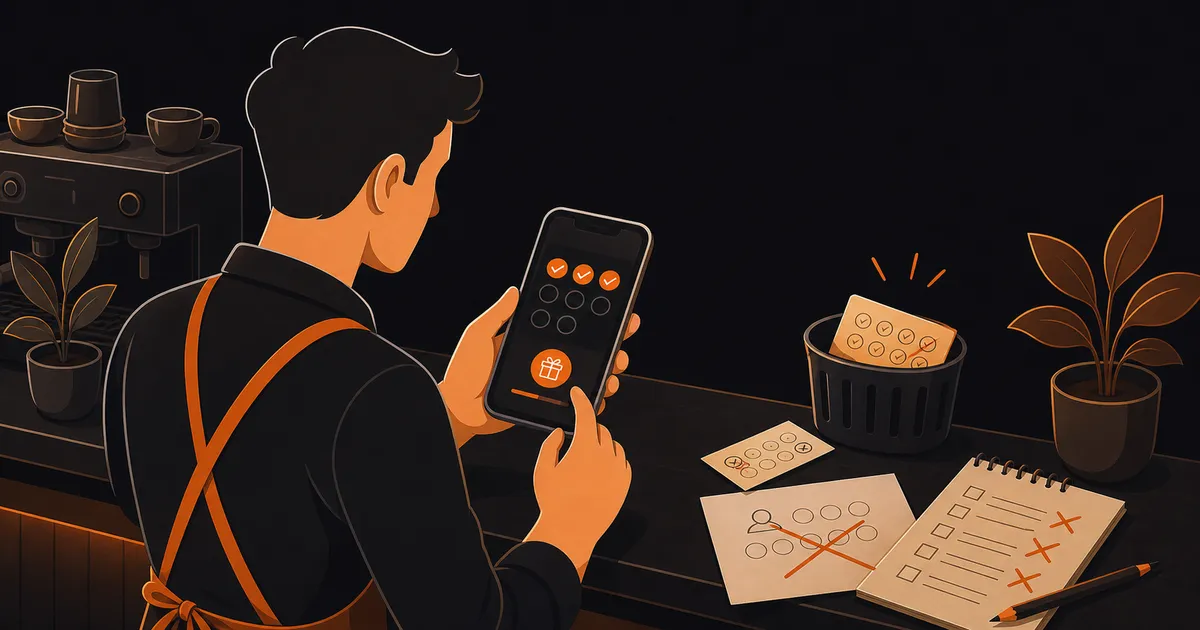
The staff experience matters just as much as the customer one. If a loyalty step is awkward during peak periods, it will quietly be skipped even by a good team with good intentions.
Think about the points in a week where pace matters most:
- A breakfast queue building at the till
- A salon reception desk handling payments and rebookings
- A studio class changeover with people arriving and leaving at once
- A car wash lane moving drivers through in quick succession
If loyalty adds noticeable admin in those moments, it becomes fragile. The programme may still exist, but it no longer runs consistently enough to earn trust.
Mistake 4: Hiding progress from the customer
Customers are far more likely to care about loyalty when the progress feels visible. If they do not know whether they are two visits away from a reward or eight, the card becomes background noise.
This is one reason digital wallet-based cards often perform better than paper. The customer can see the card on the device they already carry, and the progress can be updated immediately when staff scan it.
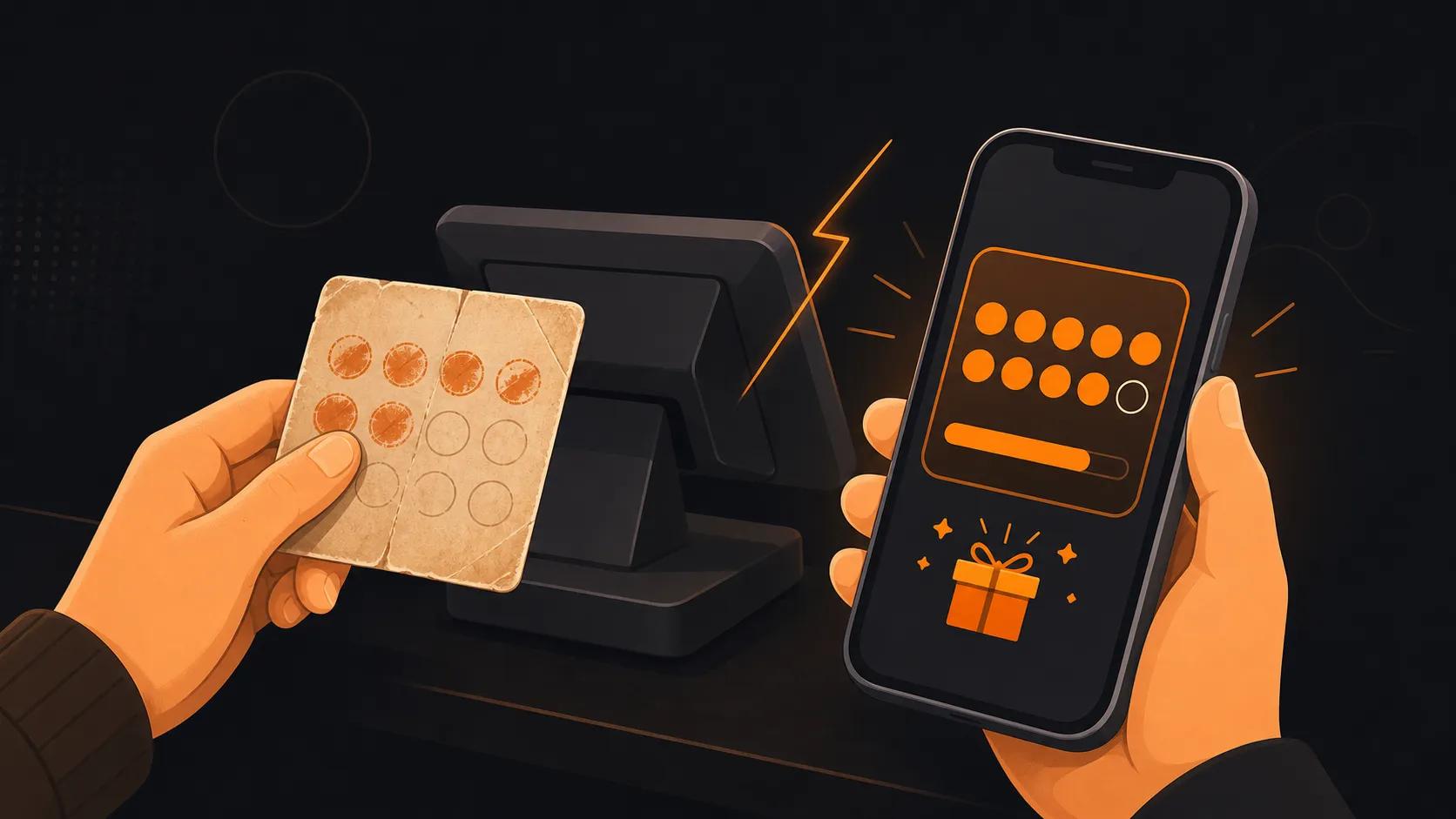
That immediacy matters. A customer who sees they are nearly there is more likely to make the next visit sooner.
Mistake 5: Treating loyalty like a one-time setup
Some businesses launch a loyalty scheme, mention it for a week, and assume it will run itself. Then months later they wonder why redemption is low or why regulars do not seem especially engaged.
Loyalty works best when it is treated as an active retention tool, not a static promotion. That means checking whether customers are joining, whether staff are using it consistently, and whether the reward is encouraging the right behavior.
It also means paying attention to timing. If a customer usually visits every three weeks and then disappears for six, that is useful information.
Mistake 6: Rewarding the wrong behavior
Sometimes the loyalty structure is clear and easy to use, but it still underperforms because it encourages a behavior that does not matter much to the business.
For example, a company may reward low-value actions when the real commercial need is more frequent visits, better rebooking, or stronger off-peak demand. In that case, the programme may generate activity without actually improving the pattern the owner cares about.
A better starting point is to ask one practical question: what repeat action would make this business healthier if it happened more consistently?
The answer might be:
- Return within a certain time window
- Rebook before leaving
- Add one higher-margin purchase to a routine visit
- Fill slower periods without discounting everything
Loyalty should support that behavior directly.
Mistake 7: Waiting too long to modernize a weak system
Some businesses keep a paper card system simply because it has always been there. It feels familiar, and replacing it sounds like a larger decision than it really is. Meanwhile, cards keep getting lost, staff keep filling gaps from memory, and there is still no clear visibility into which regulars are slipping away.
Modernizing does not have to mean making things complicated. In many cases, it means making loyalty easier to access, easier to scan, and easier to track. A digital card in Apple Wallet or Google Pay can keep the process lighter for customers while giving the business clearer insight into repeat behavior.
That combination matters because a loyalty card should not only reward the past. It should help protect the next visit too.
If your current loyalty setup creates friction, the problem may be the system rather than the idea. Fix the loyalty friction - with a card that is easier to use and track.