Digital Loyalty for Car Washes With Repeat Drivers
See how car washes can replace paper punch cards with wallet-based loyalty, quicker lane check-ins, and smarter follow-up for repeat drivers.
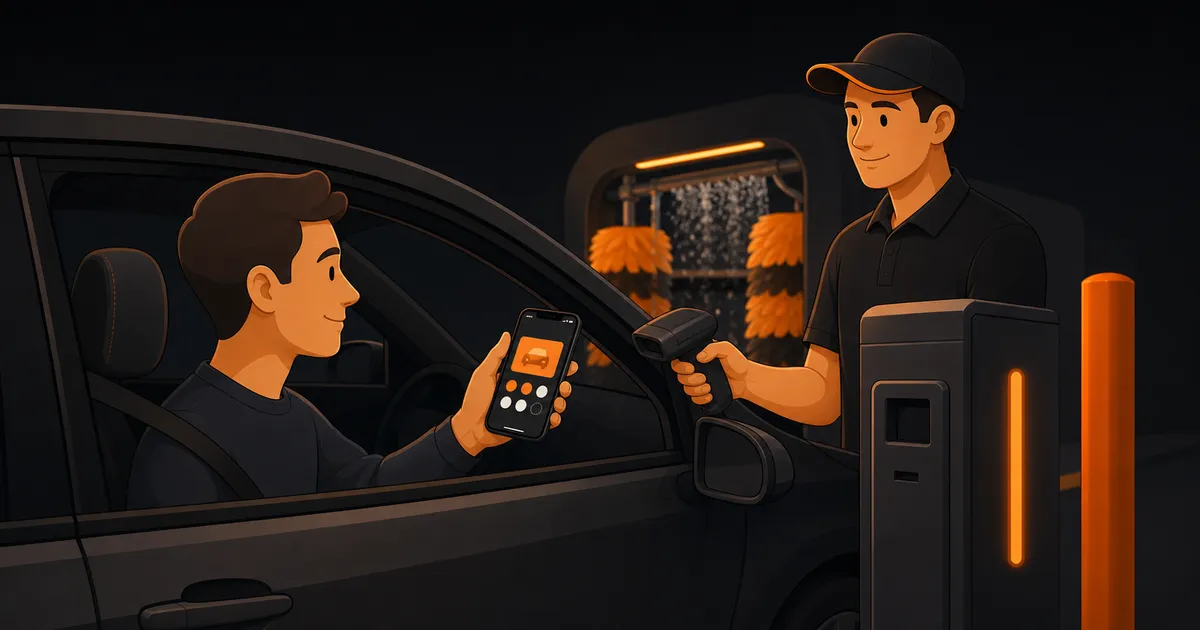
A car wash does not need a complicated loyalty idea. It needs one that still works when three cars are queuing, the forecourt is wet, and the customer is deciding in seconds whether to pull in or keep driving.
That is why digital loyalty makes sense for repeat-driver businesses. It keeps the reward card on the phone customers already have in reach, gives staff a faster way to record visits, and helps owners spot when regulars have quietly fallen out of the habit.
Why paper punch cards break down at the wash
Paper loyalty cards seem simple until they meet the reality of a car wash lane. Customers keep them in glove boxes, door pockets, handbags, or old receipts. By the time they pull up to pay, they often cannot find the card quickly enough to make it worth the delay.
That creates familiar friction:
- Drivers forget the card because they only visit every couple of weeks
- Staff skip the punch when the queue starts backing up
- Wet cards get damaged or unreadable
- Owners cannot tell which regulars are fading out until visits have already dropped
The problem is not that customers dislike loyalty. The problem is that paper depends on memory in a setting built around speed.
Loyalty works better when it fits the queue instead of slowing it down.
A wallet pass matches the way drivers actually arrive
Most repeat customers approach the wash with their phone nearby, often in hand as they pay. A wallet pass fits that moment better than a paper card because it does not ask them to search for anything.
Think about a Saturday afternoon rush after school runs and errands. A parent in an SUV pulls into the pay lane with two children in the back, a vacuum token already in mind, and about thirty seconds of patience. If the loyalty step depends on digging through the centre console for a damp card, it will probably be missed. If the loyalty card opens on the phone and staff can scan it straight away, it stays part of the flow.
What loyalty looks like during a busy lane handoff
The best test for any car wash process is whether it survives a queue. If it only works when nobody is waiting, it is not much of a system.
During the post-rain weekend rush
Imagine a local hand wash with six cars lined up after a week of bad weather. One driver wants the premium wash, another asks about tyre shine, and a third is trying to keep their toddler from opening the door too early. Staff need to keep the line moving while still recognising regular customers.
With paper cards, that usually means one of two bad outcomes: the card takes too long to find, or the staff member says they will remember it next time. Next time is where trust starts to slip.
With a digital loyalty card, the driver shows the pass, staff scan the QR code, and the visit is recorded before the car rolls forward.
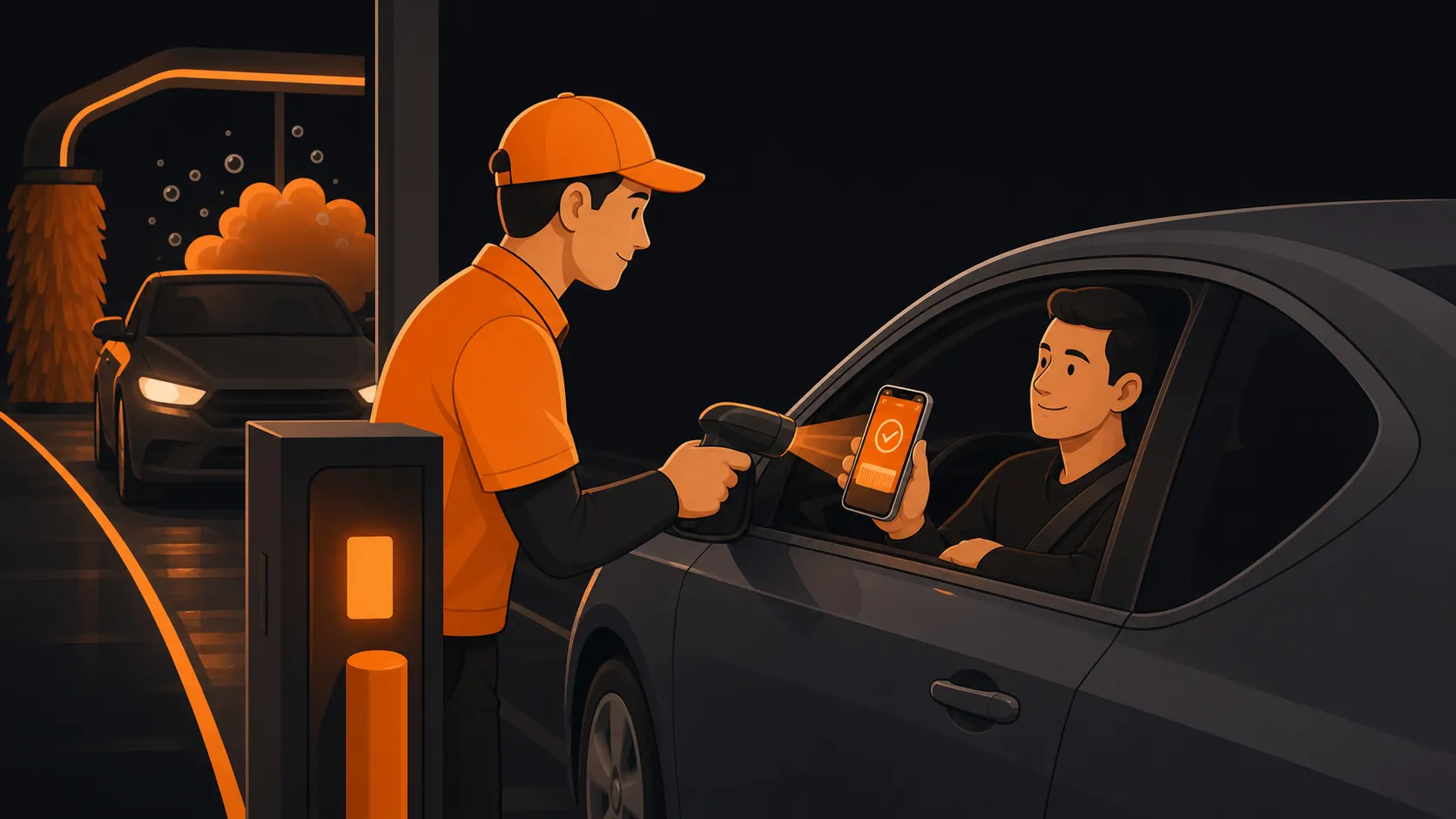
That consistency matters more than fancy reward rules. If the process is short enough to work in motion, the programme has a real chance of being used every day.
Better follow-up when regulars disappear
Car wash owners often notice a slowdown as a feeling before they see it in numbers. A driver who used to come every other Sunday stops appearing. A taxi driver who reliably bought an upgraded wash has not been in for three weeks.
Paper cards do not help with that. They only track visits when the card is present, and they give the business no way to respond when patterns change.
Digital loyalty gives owners more useful visibility. Instead of guessing, the business can see who is close to a reward, who has not visited in a while, and which customers are worth nudging before the habit disappears entirely.
That makes practical follow-up possible:
- A reminder for drivers who are one wash away from a free upgrade
- A quiet weekday offer for customers who usually visit only at peak times
- A message to regulars who have not checked in since the last spell of bad weather
The point is not to flood customers with promotions. It is to send fewer messages that actually make sense.
Rewards should match how the wash makes money
Not every car wash should run the same loyalty setup. A quick exterior wash site might reward every sixth visit. A valet business may want points that work across washes, add-ons, and interior cleaning. A forecourt operation may want to encourage midweek traffic instead of stacking more pressure onto Saturday afternoons.
What matters is that the reward can be explained quickly. The driver should understand it while their window is half down. Staff should be able to describe it in one sentence without pausing the queue.
For many sites, a simple rule is enough: wash five times, get a free upgrade. Straightforward offers are easier to remember and easier to run.
Is digital loyalty worth it for a local car wash?
For most repeat-driver businesses, yes. The return shows up in fewer lost loyalty moments, smoother pay-lane handling, better visibility into visit patterns, and a more reliable way to bring back customers before they drift away.
That matters because many car washes do not need thousands of new drivers. They need familiar number plates to keep coming back at a steady pace. If repeat visits are the backbone of the business, the loyalty system should support that rhythm instead of depending on a soggy card in the glove box.
If your best customers return on habit, your loyalty card should be as easy to reach as the payment screen. Keep regular drivers coming back - without slowing down the queue.